State branches
Save and compare concurrent timeline versions—such as design variants or scenario projections—with temporal diff tools.
State branches let teams diverge timelines to explore alternatives without disrupting a stable baseline. Each branch preserves its own temporal sequence while staying anchored to the same original 3D model. Changes are tracked as branches of the overall timeline graph, not isolated files, so remerging or referencing later is always possible. This mirrors version control for code but for time-based spatial narratives.
The platform supports side-by-side playback of branches so teams can visually compare how interventions cascade through time. Differences appear at the keyframe level—what object changed, when, and by how much—so impact analysis is precise. Users can annotate divergence points, such as a shifted foundation timeline or adjusted maintenance schedule, and toggle branch visibility to understand interdependencies before committing to one path.
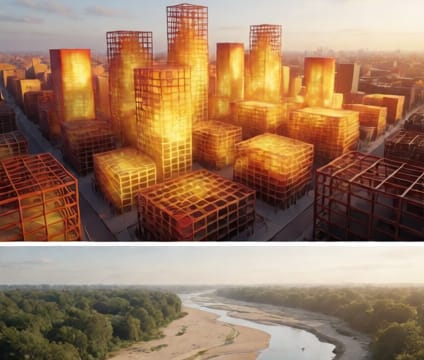
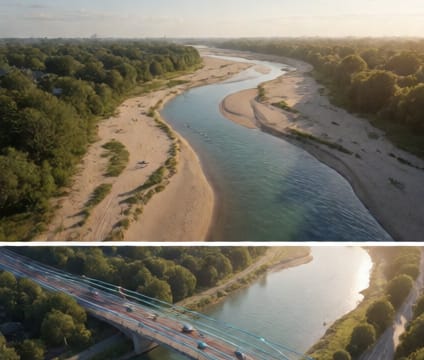
For projects involving complex planning, having branching timelines avoids costly rework from overwriting decisions. Teams can pilot a high-density development scenario while preserving a green-field alternative, knowing either can be revisited or merged. Changes remain traceable back to the original reference geometry, and comparisons include both spatial adjustments and time-lag shifts—critical for understanding downstream effects.