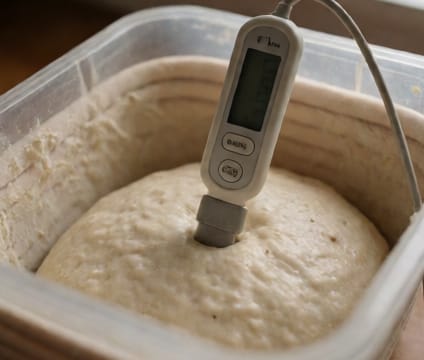
Rise Sensitivity
See how precise temperature shifts alter your dough’s peak oven spring and final volume potential.
Input your current room or proofing temperature, and the calculator models yeast respiration and gas retention near its thermal optimum—usually around 25°C. A rise from 22°C to 23°C may improve peak spring by up to 5 percent, while a jump to 28°C can shorten fermentation but reduce oven spring due to faster gas release before gluten sets. The curve reveals the narrow window where structure and expansion align best.
Every 1°C change alters rise timing and intensity. Below 20°C, dough rises slowly but holds gas well, giving taller loaves. Above 28°C, yeast exhausts sugars quickly, risking collapse during baking. Using live feedback lets you avoid common mistakes like proofing at 30°C and wondering why the crust cracks before the loaf opens properly.
For repeatable results, aim for the steepest part of the curve: that 2–3°C sweet spot where each degree adds measurable spring. Cross-check your oven’s actual proofing temp—thermometers often differ from display readings—so your chosen setting matches the real environment dough experiences before baking.