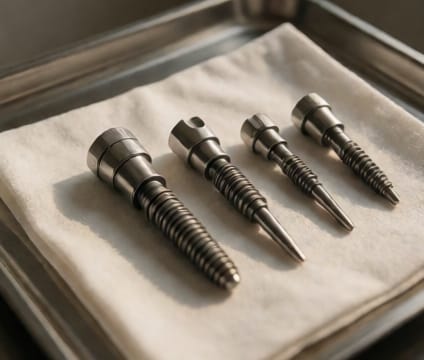
Failure Triggers & Timeline
Implant failure is rare but strongly tied to timing, behavior, and health—not randomness—and can often be anticipated.
Early failure—occurring within the first three months—ranges from 1% to 3%, usually due to poor initial stability, infection, or premature loading. This phase hinges on biologic integration: if the implant doesn’t bond with bone (osseointegration), it will loosen or fail to anchor. Risk factors include inadequate bone density at placement, surgical trauma, or bacterial contamination during the procedure—highlighting why precise technique and careful case selection matter early on.
Late failure, defined as loss after five years, happens at about 0.5%–1% annually and accumulates over time. Unlike early failure, it’s rarely about surgical error—it’s often linked to long-term biomechanical stress, poor hygiene, or systemic factors like smoking or uncontrolled diabetes. Peri-implantitis, a progressive inflammatory condition around the implant, accounts for most late losses. Regular professional cleanings and vigilant home care dramatically reduce this risk.
The key insight is timing: if an implant is stable at six months, it’s very likely long-term. After five years, continued success depends more on maintenance than initial placement. Patients who avoid tobacco, control systemic conditions, and attend biannual check-ups with specialized cleanings see implant longevity matching natural teeth. Proactive habits—not just the implant itself—determine outcome over decades.