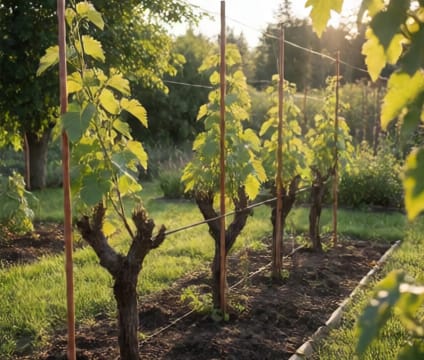
Pruning for Airflow
Strategic pruning opens the canopy and reduces humidity—target lower suckers, keep structural branches, and stop by flowering.
Remove suckers that emerge between the main stem and the first set of true leaves, especially those growing downward or inward. Use clean, sharp pruners and work in dry conditions to avoid spreading spores. Avoid pruning during rain or dew—delay until late morning if needed. This minimizes ground-hugging foliage that traps moisture and invites late blight or leaf spots.
Keep suckers on the top third of the plant if they develop into fruiting branches—these often bear early and contribute yield without shading lower zones. Never prune above the first flower cluster unless replacing a damaged main stem. Stop all pruning by bloom set; new growth at this stage won’t ripen and only adds disease-prone tissue. Fewer, stronger branches also make support easier and more stable.
For indeterminate varieties, maintain a single or double main stem by culling all but one or two sturdy suckers beneath the first flower cluster. Remove lower leaves up to 12 inches from the soil—these are most prone to splash-borne pathogens. Always disinfect tools between plants (10% bleach solution or rubbing alcohol), especially after spotting spots or mildew, to prevent cross-contamination.