Book Your Tour
Home › Sights

Top sights in Savannah

The places most worth your time in and around Savannah, and where to find them.

On the map

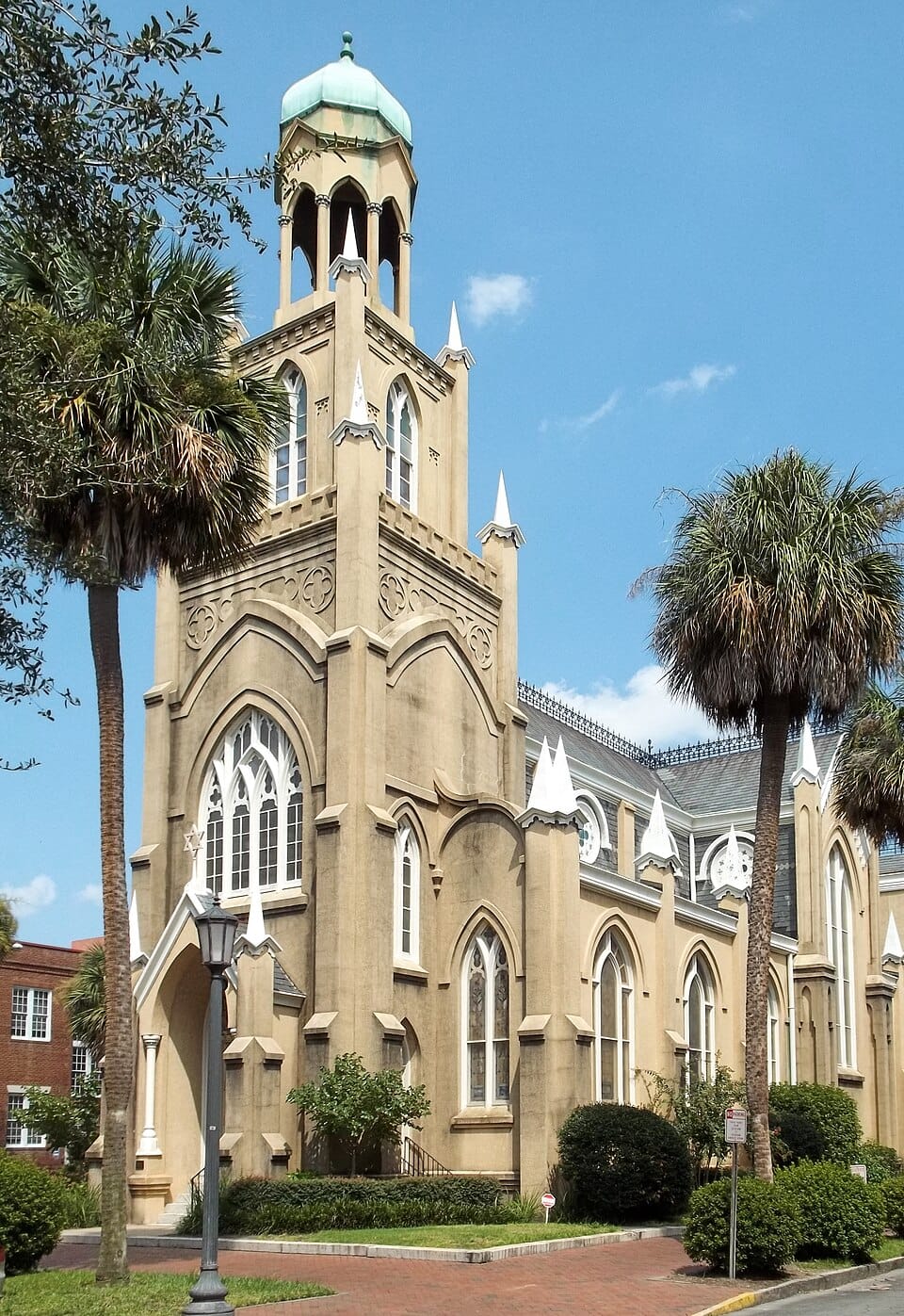
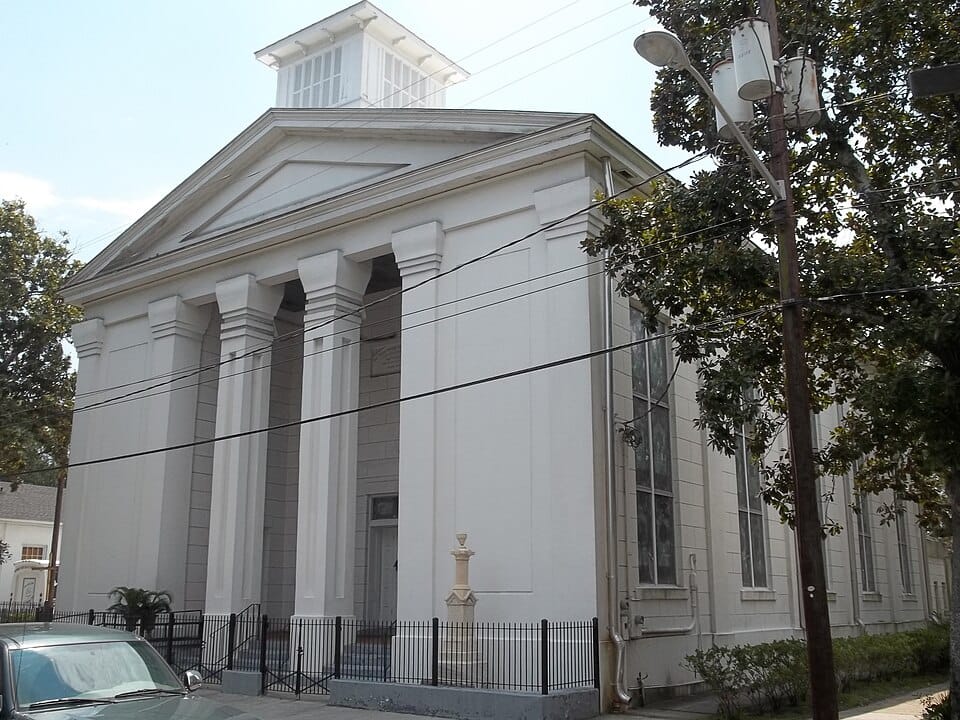
Congregation Mickve Israel
Photo: Ebyabe · CC BY-SA 3.0

Congregation Mickve Israel

2.4 km from the centre

Congregation Mickve Israel (transliterated from Hebrew as "Congregation for the Hope of Israel") is a Reform Jewish congregation and synagogue located at 20 East Gordon Street, Monterey Square, in Savannah, Georgia, in the United States. The site also contains a Jewish history museum. Organized in 1735 by mostly Sephardic Jewish immigrants of Spanish-Portuguese extraction from London who arrived in the new colony in 1733, it is one of the oldest congregations in the United States.

More on Wikipedia →
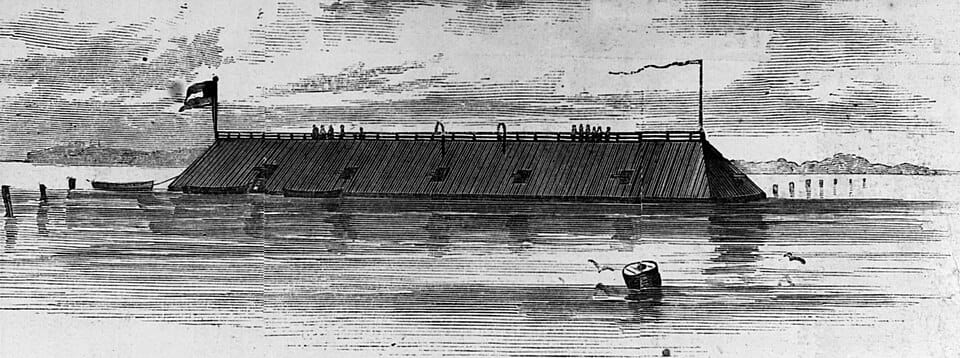
Port of Savannah
Photo: US Army Corps of Engineers · Public domain

Port of Savannah

9.8 km from the centre

The Port of Savannah is a major U.S. seaport located at Savannah, Georgia. Its facilities for oceangoing vessels line both sides of the Savannah River and are approximately 18 miles (29 km) from the Atlantic Ocean. Operated by the Georgia Ports Authority (GPA), the Port of Savannah competes primarily with the Port of Charleston in Charleston, South Carolina to the northeast, and the Port of Jacksonville in Jacksonville, Florida to the south.

More on Wikipedia →
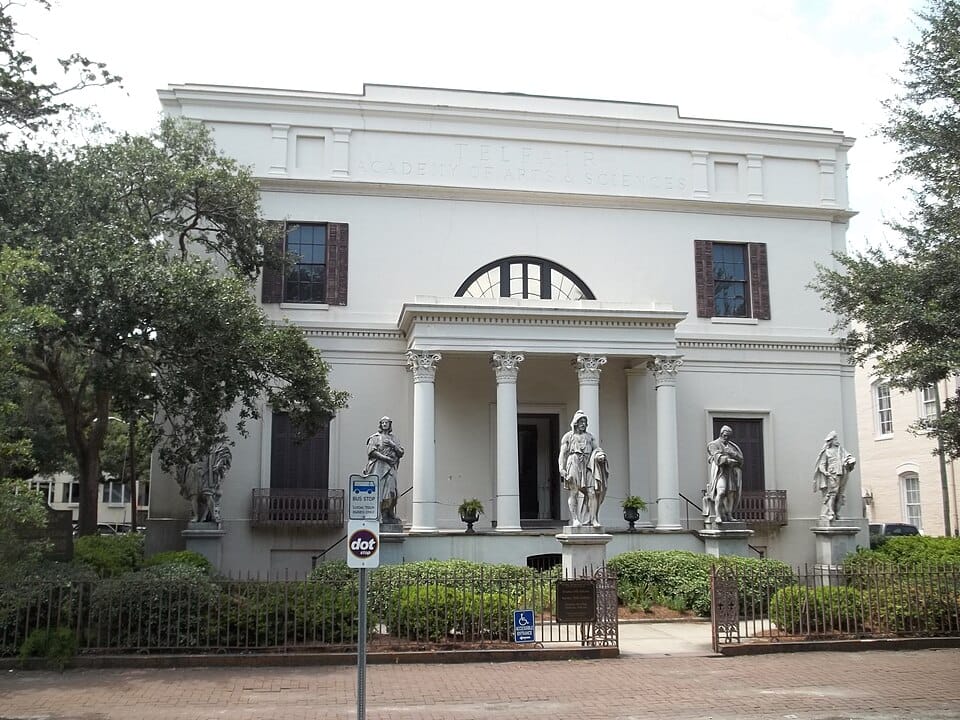
Telfair Museums
Photo: Ebyabe · CC BY-SA 3.0

Telfair Museums

3.2 km from the centre

Telfair Museums, in the historic district of Savannah, Georgia, was the first public art museum in the Southern United States. Founded through the bequest of Mary Telfair (1791–1875), a prominent local citizen, and operated by the Georgia Historical Society until 1920, the museum opened in 1886 in the Telfair family's renovated Regency style mansion, known as the Telfair Academy. The museum currently contains a collection of over 4,500 American and European paintings, sculptures, and works on paper, housed in three buildings: the 1818 Telfair Academy (formerly the Telfair family home); the 1816 Owens-Thomas House & Slave Quarters, which are both National Historic Landmarks designed by British architect William Jay in the early nineteenth century; and the contemporary Jepson Center for the Arts, designed by Moshe Safdie and completed in 2006.

More on Wikipedia →
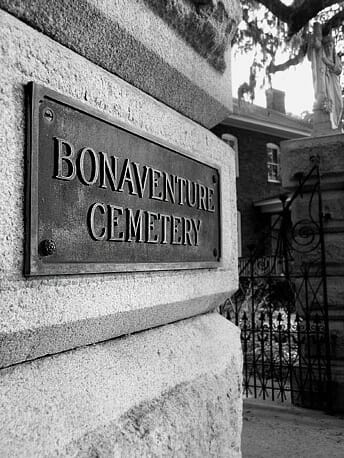
Bonaventure Cemetery
Photo: User:Frogwhite (Carmen Cordelia) · Public domain

Bonaventure Cemetery

5.6 km from the centre

Bonaventure Cemetery is a rural cemetery located on a scenic bluff of the Wilmington River, southeast of downtown Savannah, Georgia. The cemetery's prominence grew when it was featured in the 1994 novel Midnight in the Garden of Good and Evil by John Berendt, and in the subsequent movie, directed by Clint Eastwood, based on the book. It is the largest of the city's municipal cemeteries, containing nearly 160 acres (0.65 km2).

More on Wikipedia →
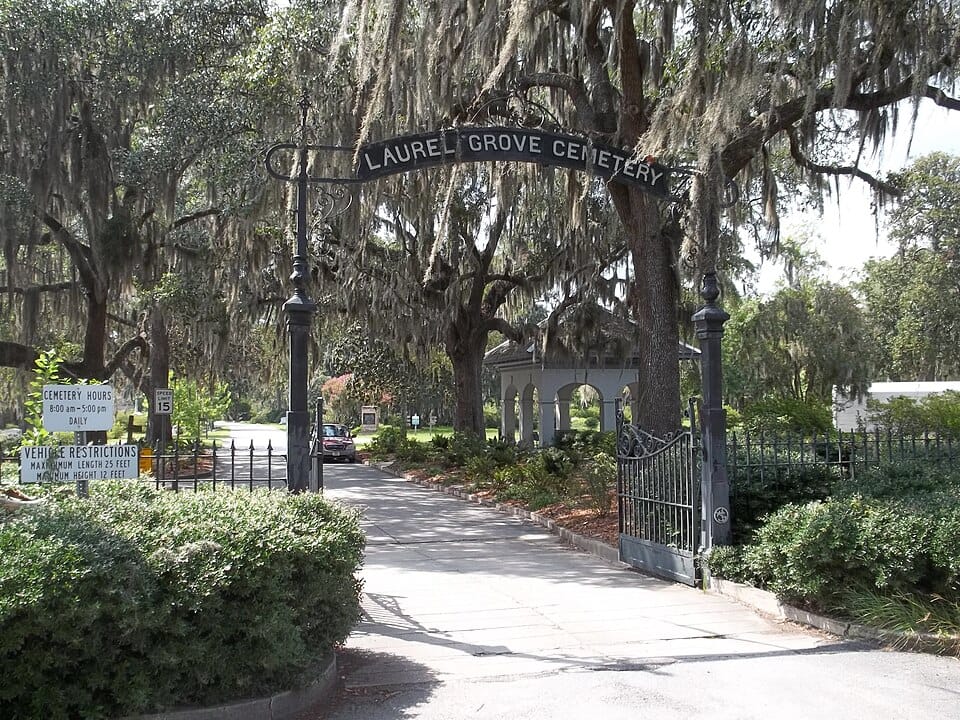
Laurel Grove Cemetery
Photo: Ebyabe · CC BY-SA 3.0

Laurel Grove Cemetery

1.7 km from the centre

Laurel Grove Cemetery is a cemetery located in midtown Savannah, Georgia. It includes the original cemetery for white people (now known as Laurel Grove North) and a companion burial ground (called Laurel Grove South) that was reserved for slaves and free people of color. The original cemetery contains the graves of many of Savannah's Confederate veterans of the American Civil War.

More on Wikipedia →
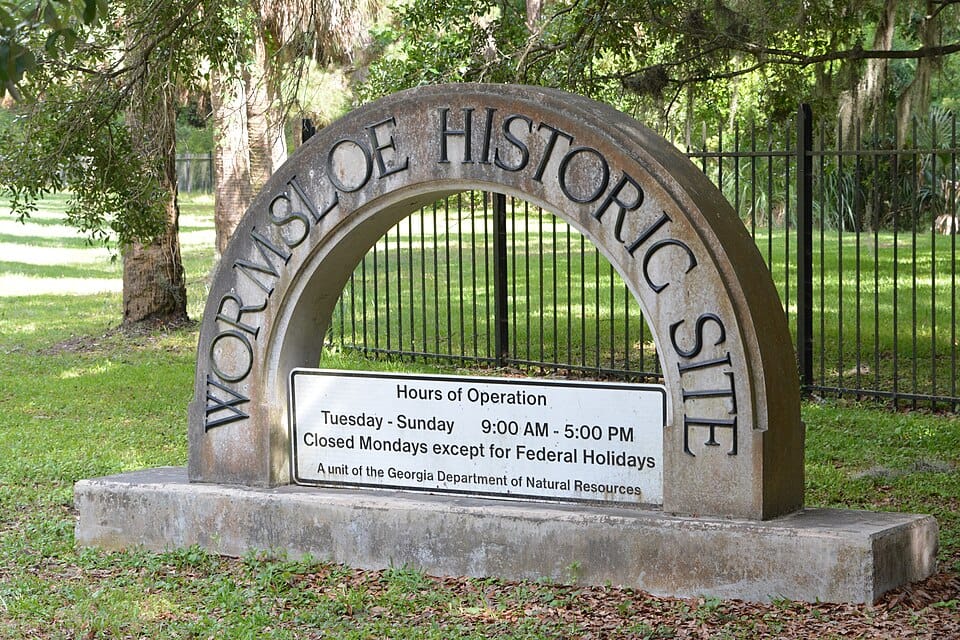
Wormsloe Historic Site
Photo: Bubba73 · CC BY-SA 3.0

Wormsloe Historic Site

10.1 km from the centre

The Wormsloe State Historic Site, originally known as Wormsloe Plantation, is a state historic site near Savannah, Georgia, in the southeastern United States. The site consists of 822 acres (3.33 km2), protecting part of what was once the Wormsloe Plantation, a large estate established by one of the founders of colonial Georgia, Noble Jones. The site includes a 1.5-mile (2.4 km) dirt road lined with southern live oaks, the ruins of a small house with fortified walls built of tabby, a museum, and an area with recreations of colonial structures such as a blacksmithing forge and a house similar to those first built in the colony of Georgia (or as housing for enslaved people).

More on Wikipedia →
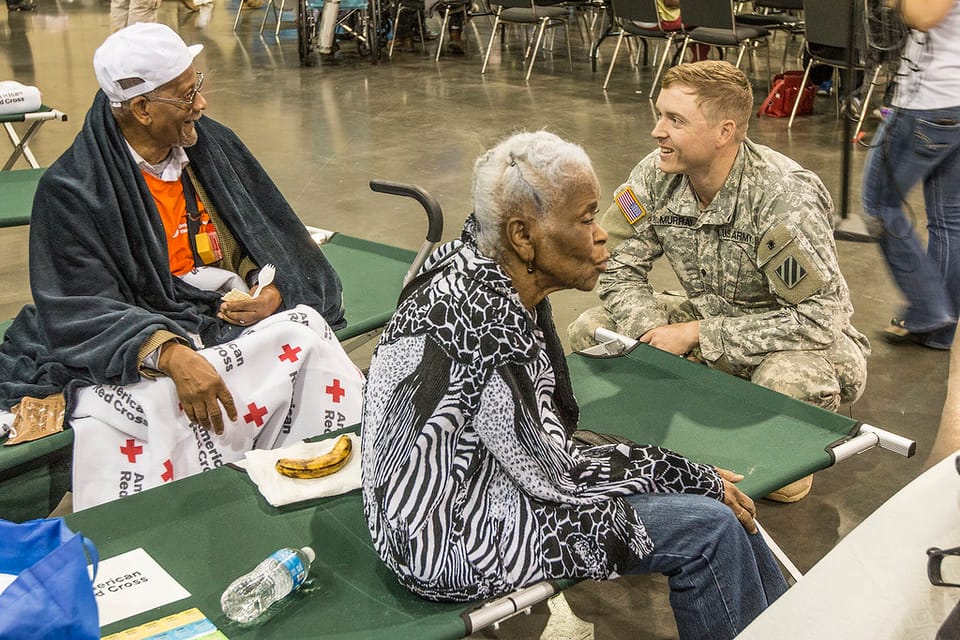
Savannah Civic Center
Photo: Georgia National Guard · CC BY 2.0

Savannah Civic Center

3 km from the centre

The Savannah Civic Center is a multi-purpose facility located in Savannah, Georgia, in Savannah Historic District. Built in 1974, the facility consists of an arena, theater, ballroom, and exhibit halls. Throughout the years, the center has hosted various concerts, conventions, exhibits, high school and college graduations, trade shows, theatre, ballet, and comedy shows.

More on Wikipedia →
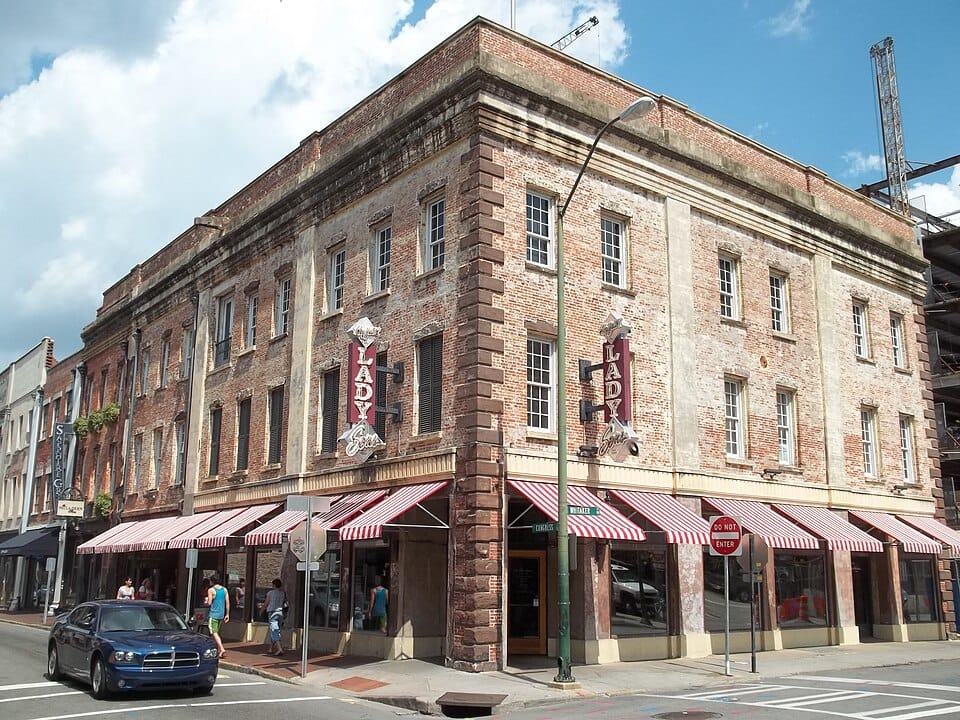
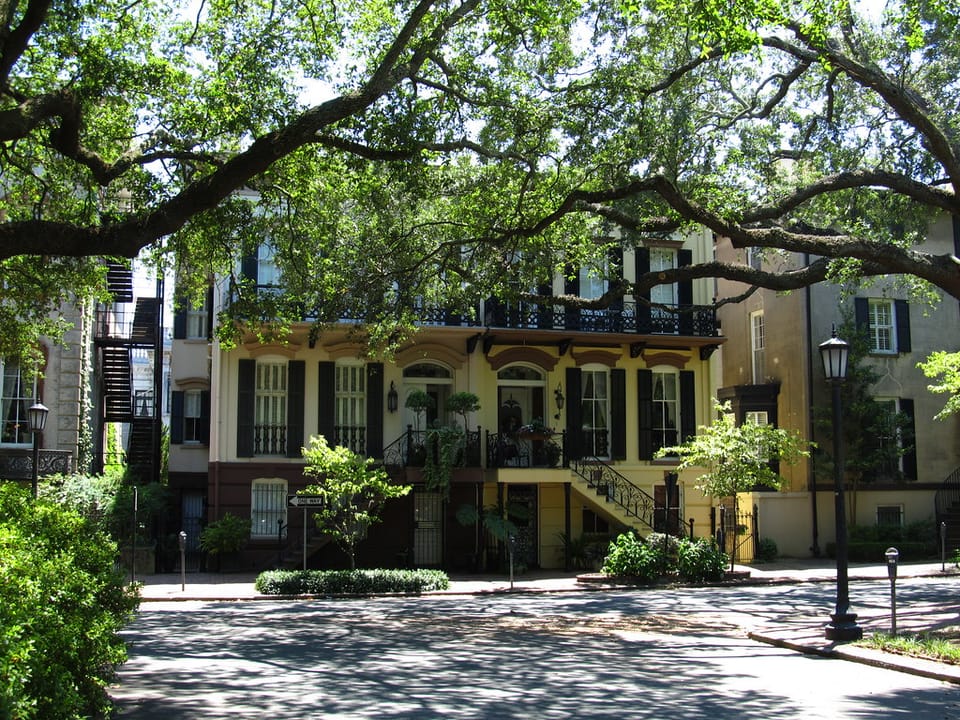
Savannah Historic District (Savannah, Georgia)
Photo: Ebyabe · CC BY-SA 3.0

Savannah Historic District (Savannah, Georgia)

2.9 km from the centre

The Savannah Historic District is a large urban U.S. historic district that roughly corresponds to the pre–Civil War city limits of Savannah, Georgia. The area was declared a National Historic Landmark District in 1966, and is one of the largest urban, community-wide historic preservation districts in the United States. The district was established in recognition of the Oglethorpe Plan, a unique model of urban planning begun in 1733 by James Oglethorpe at Savannah's founding and propagated during the first century of the city's growth.

More on Wikipedia →
First Bryan Baptist Church
Photo: Ebyabe · CC BY-SA 3.0

First Bryan Baptist Church

3.5 km from the centre

First Bryan Baptist Church is a church organized in Savannah, Georgia by Andrew Bryan in 1788 for African-Americans. Considered to be the Mother Church of Black Baptists, the site was purchased in 1793 by Bryan, a former slave who had also purchased his freedom. The first structure was erected there in 1794.

More on Wikipedia →
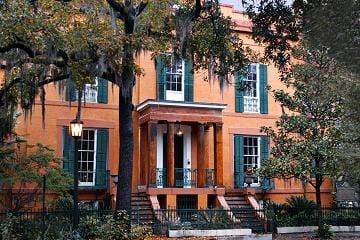
Sorrel–Weed House
Photo: Unknown · CC BY-SA 3.0

Sorrel–Weed House

2.8 km from the centre

The Old Sorrel–Weed House Museum, or the Francis Sorrel House, is a historic landmark in Savannah, Georgia located at 6 West Harris Street in Savannah, Georgia. It represents one of the finest examples of Greek Revival and Regency architecture in Savannah and was one of the first two homes in the State of Georgia to be made a State Landmark in 1954. At 10,000 square feet, it is also one of the largest houses in the city.

More on Wikipedia →
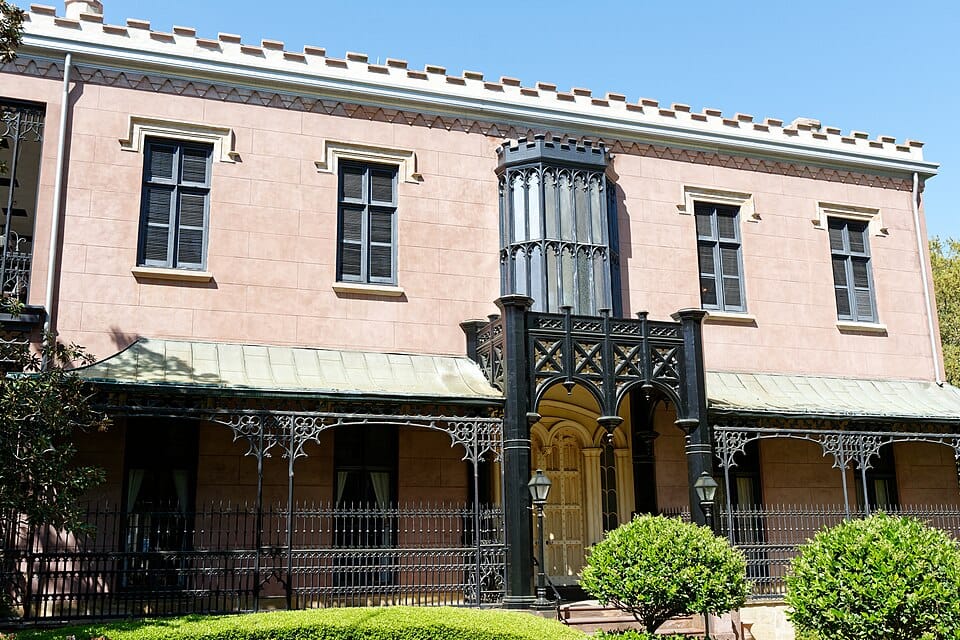
Green–Meldrim House
Photo: Bubba73 (Jud McCranie) · CC BY-SA 4.0

Green–Meldrim House

2.7 km from the centre

The Green–Meldrim House is a historic house at 14 West Macon Street, on the northwest corner of Madison Square, in Savannah, Georgia. Built in 1853, it was designated as a National Historic Landmark in 1976 as one of the American South's finest and most lavish examples of Gothic Revival architecture. The house is owned by the adjacent St.

More on Wikipedia →
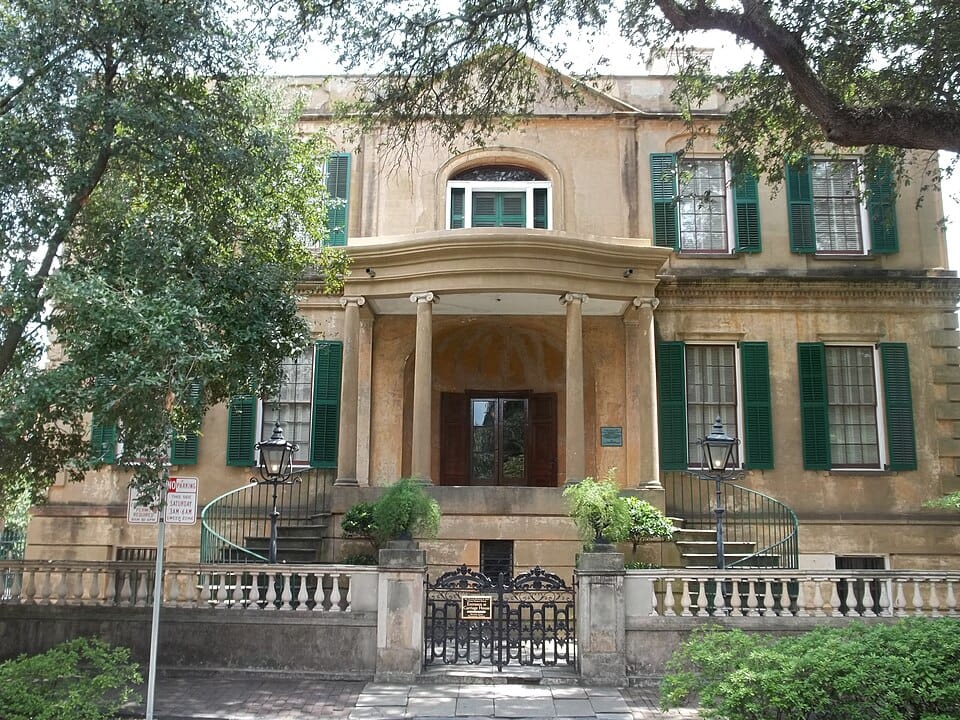
Owens–Thomas House
Photo: Ebyabe · CC BY-SA 3.0

Owens–Thomas House

3.3 km from the centre

The Owens–Thomas House & Slave Quarters (originally known as the Richardson House) is a historic home in Savannah, Georgia, that is operated as a historic house museum by Telfair Museums. It is located at 124 Abercorn Street, on the northeast corner of Oglethorpe Square. The Owens–Thomas House was designated a National Historic Landmark in 1976, as one of the nation's finest examples of English Regency architecture.

More on Wikipedia →
★

Crawford Square (Savannah, Georgia)

3.1 km from the centre

Crawford Square is one of the 22 squares of Savannah, Georgia, United States. It is located in the middle row of the city's five rows of squares, on Houston Street and East McDonough Street, and was laid out in 1841. It is south of Greene Square and east of Colonial Park Cemetery on the eastern edge of the Savannah Historic District.

More on Wikipedia →
Taylor Square (Savannah, Georgia)
Photo: Ken Lund · CC BY-SA 2.0

Taylor Square (Savannah, Georgia)

2.5 km from the centre

Taylor Square, formerly known as Calhoun Square, is one of the 22 squares of Savannah, Georgia, United States. Laid out in 1851 south of Lafayette Square, west of Whitefield Square, and east of Monterey Square, it is named in honor of Susie King Taylor, an educator, memoirist, and the first Black nurse to serve in the American Civil War. The oldest buildings on the square, the Adam Short Property and the Alexander Bennett House (both on East Taylor Street), date to 1853.

More on Wikipedia →