Brownstone Back Alleys
Behind gleaming facades, narrow alleys hold hearths of daily life—service lanes humming with quiet rituals.
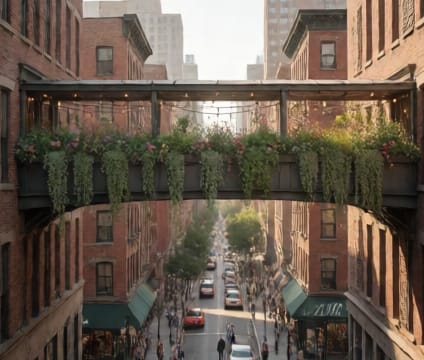
These alleys run parallel to main streets, often narrower than a parked car, lined with iron gates, delivery slots, and rust-streaked brick. Locals know them by the scent of roasting chestnuts in winter or the sound of early risers drawing water. At dawn, laundry lines crisscross overhead and bakers unload dough into brick ovens—staying out of sight but central to neighborhood rhythm.
Fire escapes here aren’t just safety features but extensions of homes—wrought-iron ladders draped in ivy, balcony nooks holding coffee cups and handwritten signs. Some have been converted into studios: painters work in the morning light, musicians practice scales, writers type into laptops while watching pigeons strut below. In summer, windows flung open invite shared laughter and snippets of music drifting down.
Unlike polished parks or commercial strips, these alleys evolve slowly. New paint jobs appear overnight, community murals get repainted seasonally, and doorframes bear generations of knocks and carvings. The pace here is measured in laundry drying cycles and trash collection rounds, not foot traffic counts. To navigate them is to learn the unspoken contract of shared silence and sudden warmth.