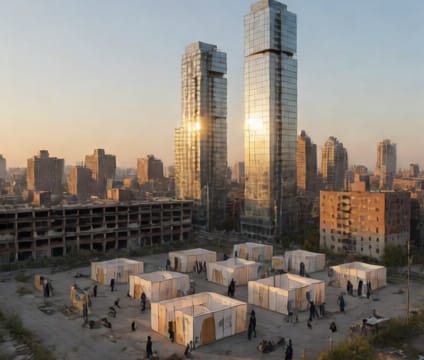
Policy Shifts
Changes to parking rules, building codes, and sidewalk access—how city decisions reshape how people move, linger, and gather on the street.
A revised parking regulation might expand daytime loading zones, reducing curb space for passengers but enabling more delivery activity—a quiet reshuffling that affects foot traffic and sidewalk congestion. These tweaks often appear as temporary pilot zones first, visible through new signage, temporary bollards, or changes in traffic flow near commercial corridors.
Building code adjustments—like relaxed facade standards for storefronts or temporary canopy permits—can enable quick adaptive reuse of spaces. This often leads to extended outdoor seating or pop-up signage, which in turn alters how people navigate the sidewalk and where they pause to look inside.
Public space access changes, such asExpanded Open Streets or reduced curb cuts, directly reshape pedestrian flow. When a street converts to pedestrian-only for part of the week, local businesses may adjust hours, and residents often report new patterns of social mixing—even if unofficial, visible in early-evening street games or impromptu performances.