Historic Kitchens
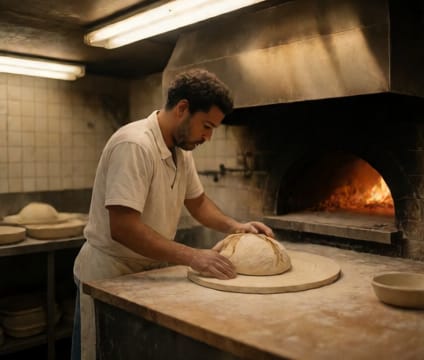
Spaces where cooking methods and tools have remained nearly unchanged for generations, preserving texture, fire, and time-honored technique.
Fire may come from coal or wood, not gas; stones remain set to specific temperatures for hours; tools show patina from decades of use. These kitchens resist automation, favoring hands-on timing measured by scent, sound, and muscle memory. The texture of dough, the sizzle of a pan, the rhythm of stirring—all calibrated not by timers but by inherited instincts.
Preservation here is practical, not performative. A cast-iron skillet isn’t curated for Instagram; it’s valued because it yields the right crust on bread. Fermenting crocks sit beside stainless steel, their contents stirred by the same wooden spoon used since the 1950s. Change is measured in lifespan, not trend.
Visitors see how heat and patience transform raw ingredients into something unmistakably of place and time. There’s no separation between the material and the method—the fire’s, the dough’s give, the steam’s hiss are all part of the grammar of flavor. This is cuisine as continuity, not evolution.