Ginza Chūō
Chūō-dōri’s colonnaded spine invites a slow unraveling of its layered design history and intentional pedestrian grace.
Start east at Shinbashi Bridge, where the first row of colonnades begins—originally conceived in brick, now reimagined in glass and steel. The boulevard’s width and symmetry were established after the 1872 fire to allow light, air, and movement—still visible in how shadows fall between buildings during late morning. Approach the Hattori Clock Tower at Wako just as the light glances off the brass hands, casting a crisp elongated shadow down the pavement toward Tsukiji.
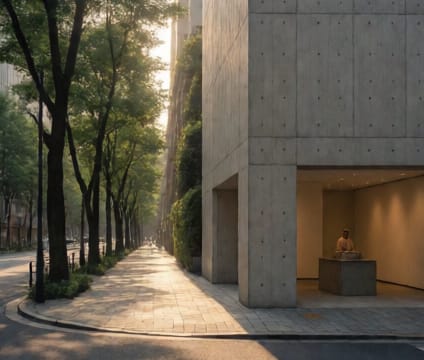
Continue west, noting how the buildings rhythmically shift: mid-block setbacks create breathing chambers, while cantilevered upper floors cast narrow bands of shade at midday. The colonnades aren’t mere ornament—they’re spatial tools, designed for lingering and observing, not just passing through. Where newer structures rise, glass facades mirror the sky, softening the boulevard’s scale in contrast to older stone and brass-clad blocks.