Ongoing Education
Our surgeons engage in continuous learning on materials, digital workflows, and soft-tissue management to deliver current, evidence-based care.
Implant science evolves quickly—new implant surfaces, threading designs, and abutment connections appear regularly, and outcomes depend on choosing what’s right for *your* tissue type and occlusion. Our surgeons attend multiple conferences each year and participate in hands-on workshops to test new systems, compare longevity data, and practice digital workflows that improve precision and reduce chair time.
Soft-tissue handling remains critical: newer techniques like connective tissue grafts, collagen membranes, and minimally invasive flaps reduce recession risk and improve aesthetics. Surgeons refine these skills through peer-reviewed case reviews and live demonstrations, always asking how a change improves healing speed, comfort, or long-term stability—not just lab results.
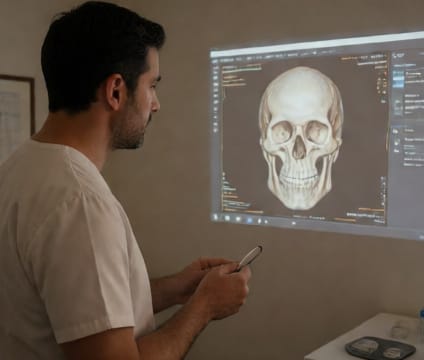
We also track digital trends: CBCT integration, 3D-printed surgical guides, and AI-assisted planning tools (used solely for visualization and accuracy) help us place implants with sub-millimeter precision. Our commitment is not to adopt every new tool, but to adopt only those proven to reduce uncertainty, increase predictability, and keep your experience safer and more comfortable.