Weather Notes
Persistent spring moisture elevates late blight pressure; proactive trellising and mulching break the disease cycle before it spreads.
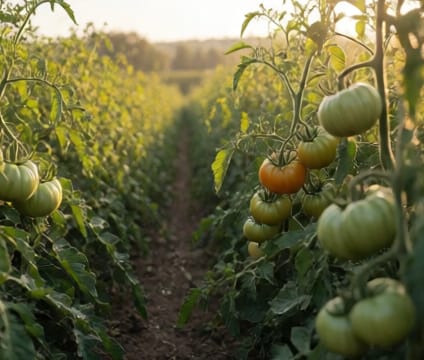
When nights stay cool and rain lingers past mid-spring, blight risk increases. The pathogen Phytophthora infestans spreads rapidly on wet foliage, so reducing leaf moisture duration is critical. Trellising improves airflow around plants and raises fruit off damp soil—this alone cuts infection risk by limiting splash dispersal of spores. Stake early, even before fruit sets, because retrofitting tangled vines stresses plants and creates entry points for pathogens.
Mulch as soon as the soil warms and holds structure, not when it’s still spongy. Organic mulches like straw or shredded leaves suppress splash, regulate temperature, and reduce humidity at plant base. Apply mulch several centimeters deep but keep it away from stems to prevent stem rot. In heavy clay soils, avoid plastic mulch unless raised beds are used—trapped moisture can backfire. Start this before the first expected rain event, not after signs appear.
Combine physical controls with preventative sprays if history shows blight on your site. Copper-based products or bicarbonate fungicides applied before rain events can provide protective coverage, but reapply after 2.5 cm of rainfall. Remove lower leaves early to create a dry zone near soil—this is more effective than waiting for symptoms. Track local alerts and adjust timing based on dew duration and other conditions, not just rainfall totals.