Oven Spring 101
Optimal oven spring relies more on technique and tool setup than oven power—steam, scoring, and peel use make the decisive difference.
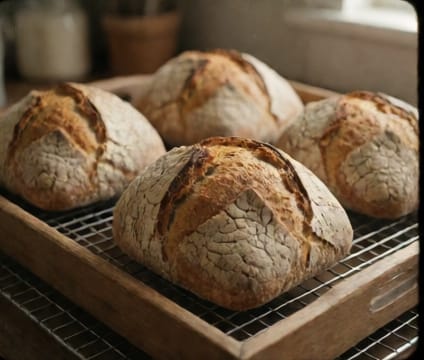
Oven spring—the final rise in the oven—depends on gas expansion and gluten relaxation before the crust sets. Steam is critical: it delays crust formation, letting the loaf expand freely for a key phase of baking. Without it, the surface skin sets too soon, trapping gas inside and causing uneven or limited rise. Use a preheated Dutch oven, pour boiling water into a preheated pan below the loaf, or spritz the walls with distilled water during the first few minutes. Avoid opening the oven door during this phase to retain heat and steam.
Scoring is both functional and aesthetic: deep, angled cuts (10–30 degrees from vertical) allow controlled expansion, while shallow or perpendicular cuts may tear or close up. A sharp, serrated blade (like a lame) ensures clean incisions. Place scores where the dough has tension—typically on the top—so the cut edges separate smoothly rather than compressing inward. For round boules, radial cuts work best; for batards, longitudinal cuts with gentle fluting guide expansion down the loaf’s length.
The peel you use—wood or metal—affects how cleanly you transfer the loaf and whether it sticks or tears during the swing. A lightly floured wood peel holds dough better for initial transfer, while a metal peel slides cleanly into the oven. Preheat both peel and stone for at least 45 minutes to avoid thermal shock that can deflate the loaf. A firm, confident transfer (not a drag or slide) minimizes disturbance to the dough’s structure, preserving the gas pockets that drive spring. Even a modest home oven can produce great spring if these steps are dialed in.