Lantern-lit Walks
These guided walks follow dim alleys and old lanes, honoring history through restraint—not reenactment.
Groups meet near historic churches, cemeteries, or quiet squares just after twilight, carrying oil lanterns or similar low-light sources. Guides speak softly, pausing to let silence settle between sentences. They refer to documented histories—letters, obituaries, city records—more often than tavern tales or unverified lore. The focus is on individuals: free Black artisans, sailors who never left port, children who walked these streets before automobiles existed.
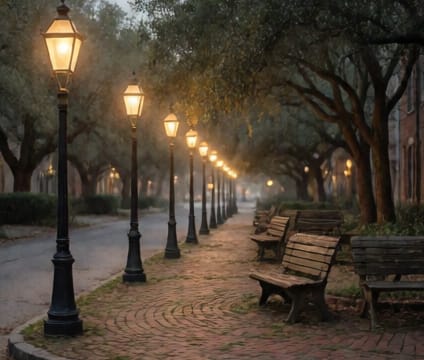
Walks move at a pace that allows observation—how light pools around a gatepost, how the wind shifts through a yard with live oaks. Stops are brief, rarely longer than five minutes, and always outdoors. The lanterns serve only to illuminate paths or landmarks, not faces or scripts. Participants often find themselves noticing details they’d passed countless times without seeing.
Participants may be invited to observe brief moments of silence—to reflect on what’s been shared or to consider what once stood in their current view. This practice is rooted in community standards that have evolved over decades, not in commercial showmanship. It’s common for strangers to exchange no more than a nod and a pause before parting ways at the walk’s end.