 petrochemicalnews.com
EPA Vapour Recovery Standards Update
Updated EPA vapour recovery standards tighten control limits for storage tanks and loading operations, prompting operational adjustments across U.S. terminals and export facilities.
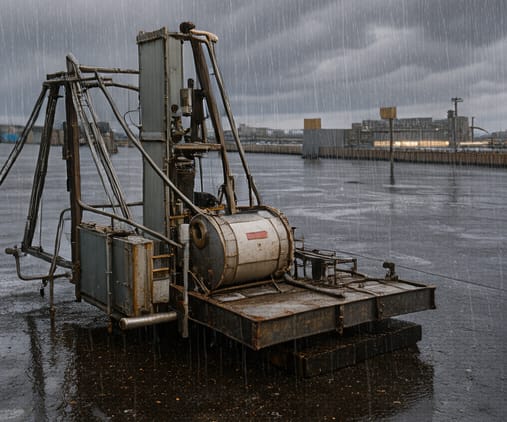
The EPA has revised its National Emission Standards for Hazardous Air Pollutants (NESHAP) for petroleum storage and distribution, lowering allowable vapour emissions during tank filling and marine loading. Facilities must now maintain tighter pressure control and implement enhanced leak detection protocols to comply with the updated thresholds. These changes apply to both new and existing infrastructure handling volatile organic compounds.
For operators managing fixed-roof tanks, the update mandates improved secondary sealing systems and continuous monitoring for fugitive emissions. Floating roof seals now require third-party verification of integrity at defined intervals. Facilities relying on flare systems must demonstrate that combustion efficiencies meet or exceed revised minimums, influencing operational schedules and maintenance planning.
Cross-border logistics are affected where U.S. export terminals align with new recovery efficiency benchmarks. Ship loading operations must incorporate real-time vapour balance tracking, requiring upgrades to loading arms and vapour return lines. Compliance timelines require assessments of retrofit readiness, particularly for older units without vapour compression capabilities.
Facilities should conduct gap analyses against the revised standards to identify needed control equipment upgrades, operational procedure changes, and staff retraining. Documentation of leak detection and repair cycles will become part of routine regulatory submissions. Anticipated enforcement reviews will focus on vapour recovery unit uptime and emission rate consistency over 90-day periods.
Key takeaways
- Lower vapour emission thresholds require upgraded sealing and monitoring.
- Marine loading operations must integrate real-time vapour tracking.
- Third-party verification of floating roof integrity now mandatory.
More in Regulatory Flow

REACH Substance Authorization List Revision
REACH adds two aromatic solvents to its Authorisation List, requiring downstream users to seek explicit permission to continue use
Read more →
API Standard 2530 Draft Changes
API 2530 draft revisions propose enhanced design criteria for vapour control systems at marine terminals, aligning with evolving
Read more →