 nature.tv
Sea Turtle Hatchlings at High Tide
Sea turtle hatchlings emerge under cover of darkness during high tide, sprinting toward the ocean to maximize survival amid predators and environmental hazards.
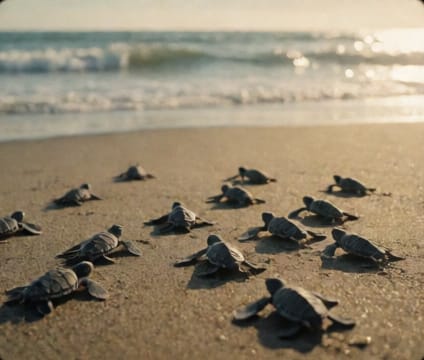
After incubating in nests for about two months, hatchlings break through the sand just before dawn, often waiting together in the nest until conditions are optimal. High tide ensures a gentler slope from dune to surf, reducing distance traveled over exposed sand and minimizing exposure to heat, predators, and disorientation from artificial lights.
Their sprint to the water is fast and determined, using wave guidance and natural light reflecting off the ocean to orient seaward. Inclement weather or bright moonlight can disrupt this instinct, leading hatchlings inland or into dangerous areas. Once they reach the surf, they paddle vigorously offshore to escape near-shore predators like birds and crabs.
The first hours at sea are especially perilous. Hatchlings enter the open ocean’s surface currents, where they become part of the floating debris community known as sargassum habitat. This provides food, shelter, and camouflage, though mortality remains extremely high in these early days.
Within days, many turtles transition to deeper waters, beginning a long juvenile phase that may last years before returning to coastal areas. Their initial journey sets the trajectory for decades of oceanic travel, often spanning entire ocean basins before sexual maturity prompts a return to natal beaches to nest.
Key takeaways
- High tide reduces travel distance and predation risk
- Hatchlings orient using light and wave cues
- Sargassum habitat offers early-stage refuge and food
More in Life Cycles
Monarch Butterflies’Annual Journey
Monarch butterflies undertake a multi-generational migration spanning thousands of miles, navigating by the sun and Earth’s
Read more →
Alpine Flowers After Melting Snow
Alpine flowers burst into bloom immediately after snowmelt, using brief growing windows to flower, set seed, and store energy
Read more →