 ittrainingcertification.com
Explain Network Architectures and Protocols
Describe common network structures and communication standards used to connect devices.
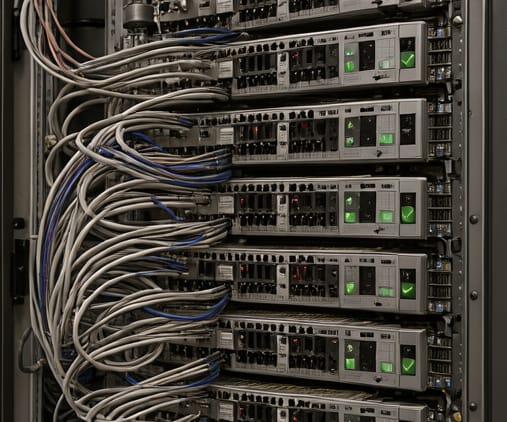
Networks organize devices using specific architectures. A local area network (LAN) connects devices within a limited physical space like a home or office. A wide area network (WAN) spans larger distances, often linking multiple LANs using routers and public or private telecommunications links. The Internet is a global WAN. Topologies describe physical or logical layout—star, bus, ring, or mesh—each with trade-offs in reliability, cost, and complexity. Recognizing these models helps anticipate performance and design behavior.
Communication across networks follows standardized protocols. The Transmission Control Protocol/Internet Protocol (TCP/IP) suite underlies most modern networks, breaking data into packets, routing them, and reassembling them at the destination. Protocols like HTTP, FTP, and SMTP operate on top of TCP/IP for web, file transfer, and email, respectively. Each layer in the OSI model handles specific tasks, from physical transmission to application-level services, ensuring interoperability across diverse hardware and software.
Devices like switches and routers direct traffic within and between networks. Switches operate at the data link layer to forward frames within a LAN using MAC addresses. Routers operate at the network layer, using IP addresses to determine paths between different networks. Addressing schemes like IPv4 and IPv6 define unique identifiers for each device. Understanding how these elements interact clarifies how data moves from source to destination reliably.
Key points
- LAN and WAN define network scale and scope
- TCP/IP enables reliable data exchange across devices
- Switches and routers direct traffic using MAC and IP addresses