Low Pressure in Multiple Fixtures
Low pressure in several faucets or showerheads at once may indicate a main line blockage—especially in buildings built before 1960.
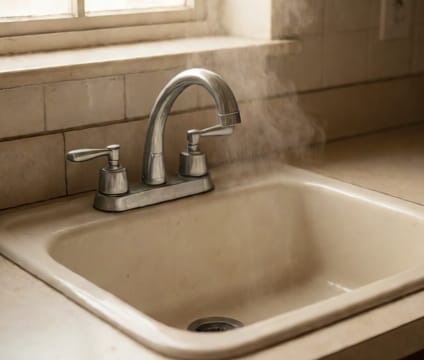
When both the kitchen sink and upstairs bathroom run weak streams simultaneously, the problem likely lies beyond individual fixtures. Pre-1960 Boston homes often have galvanized iron or lead pipes, which corrode from the inside out, narrowing flow paths over decades. This buildup can be partial at first, mimicking fixture clogs, but worsens steadily until it halts water entirely.
Mineral deposits from Boston’s hard water accelerate pipe constriction. Over time, even copper pipes can develop scale deposits, particularly where water temperatures fluctuate—like near water heaters. Plumbers regularly find homes where partial blockages have been misdiagnosed as failed aerators or cartridges, leading to wasted time and repeated repairs.
If pressure drops only in one fixture, the fix is usually localized. But simultaneous low flow across the house means the main line or a key vertical riser is compromised. A plumber can inspect with a pressure test or camera to map resistance points. Ignoring this can cause pipe bursts under sudden pressure changes—like when a washing machine fills rapidly.