Derivative reuse
Copy simulations as starting points and evolve timelines, constraints, or physics under open licensing terms.
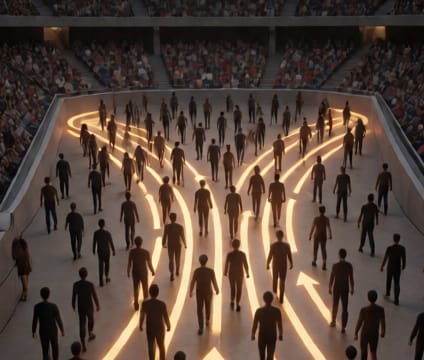
Every public project includes an editable fork link that clones the full simulation into your workspace, preserving node relationships and parameter dependencies. You can change environmental conditions—like wind vector or material damping—without breaking the original logic. The parametric skeleton remains intact, so structural nodes, joint behaviors, and motion paths respond consistently to new inputs.
Licensing is clearly indicated per project: CC-BY lets you adapt and share commercially; CC-BY-NC restricts commercial use but allows modifications for non-commercial sharing. The fork process retains attribution automatically in project metadata, reducing legal risk for institutional users. Changes propagate in real time, so forks can be collaboratively improved before publishing derivatives.
Designers often reuse common components—like crane swing radius models or crowd density algorithms—by extracting and reassigning them as reusable modules. Parameters such as gravity, friction, or yield stress are exposed in a clean JSON-like config, making integration into custom workflows straightforward. All forks are tracked in public change logs for transparency and provenance.